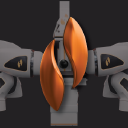
Thank you, operator, and good afternoon, everyone. We have made significant progress this quarter on several key aspects of our strategic transformation. I want to spend the majority of today's call reviewing those advances and how we are establishing a solid foundation upon which to build a substantial and successful company. Before getting to that, though, I want to address head on our commercial results and financial position. I recognize the quarterly numbers were disappointing. Our results for the first half of this year were significantly impacted by reduced capital revenue. These results do not reflect a steady state reality. We are confident in a significantly stronger second half of this year from both a revenue and cash flow perspective. Let me briefly address the weak first half and share the source of our optimism in an improved second half. Despite our significant backlog of Genesis orders, the timing of multiple hospital projects and associated system shipments became elongated, leading to minimal capital revenue in the first and second quarters. Capital sales are inherently lumpy, and the first half was far below our normalized level. Our visibility into system shipments during this third quarter and the remainder of this year gives us high confidence in significantly higher revenue recognition and cash flow. There are currently two Genesis systems in transit to European customers as we speak, with revenue recognition taking place upon delivery of those systems. There's one additional system ready to be shipped within the coming days, and we have signed purchase orders with down payments for two additional systems planned to be shipped before year-end. One of those has a contractual requirement dictated by a tender to deliver the system in the fourth quarter. The three Genesis systems currently being shipped will generate $5.5 million in revenue recognition upon delivery. The two additional systems I noted would add an additional $3 million. There remains a backlog of ordered systems beyond these 5, which are still waiting on hospitals to be ready for delivery and will likely take longer but could accelerate. We also have an active late-stage sales pipeline in all three of our key geographies, and we expect additional purchase orders for Genesis systems in the coming months. Our cash utilization in the first half of this year was significantly impacted by the weakness we had in capital sales. We can model the substantial cash receipts due with delivery of the systems I just referenced, and based on those, our best assessment is to end this year with approximately $13 million in cash and no debt. While it would be nice to have a more substantial balance sheet, we feel confident in our upcoming milestones and the incremental revenue and profit they will deliver. Our existing balance sheet allows us to reach key milestones, commercialize our new innovation and profitably grow our business. Shifting now to the progress I mentioned on our strategic innovation efforts. On the past several calls, I reviewed the full spectrum of strategic efforts we're advancing in parallel and how those are establishing a solid foundation upon which to build a substantial and successful company. I'll focus today's call going in more depth on three of the most impactful areas for future commercial success for which we have made significant progress in the last quarter: GenesisX, MAGiC and the APT acquisition. Let me start with GenesisX. In a press release this afternoon, we were excited to introduce GenesisX publicly and to share the accomplishment of key regulatory milestones: obtaining CE mark for the system in Europe and submitting a 510(k) application with FDA. GenesisX is an entirely new robotic platform, the third for Stereotaxis after Niobe, which was released in 2003; and Genesis in 2020. It incorporates newly designed magnets that are significantly smaller than before, a particularly innovative robotic base with built-in magnetic shielding and more streamlined, distributed and sophisticated electronics throughout the system. GenesisX builds upon the well-established proprietary technology Stereotaxis has pioneered and mastered: robotic magnetic navigation. It's designed with the same uncompromising eye towards clinical performance, robust real-world reliability and intuitive ease of use. It retains the speed and immediate responsiveness of Genesis, which has been well received by our physician users. What is special about GenesisX is that we have made robotic magnetic navigation available in a form factor that supports broad accessibility and commercial scalability. As mentioned in the past the challenges of translating physician interest in robotics into adoption and commercial growth, we operate in a huge and highly attractive market, in which we hold less than 1% market share despite our established clinical benefits and unique differentiation. We have had hundreds of physicians express genuine interest in our technology since launching Genesis. Over 95% never end up getting the robot. The single largest impediment is the reliance on hospital construction and the long extended timeline that creates, along with the complexity of translating physician clinical interest into full organizational movement at the hospital. Our Niobe and Genesis Systems require architectural planning and construction to accommodate their installation. Preparing an operating room to accommodate a system entails significant structural modification, including the installation of thousands of pounds of magnetic shielding in the walls, reinforcement of the floor, high-power electrical work and extensive cabling through conduits between the operating room, control room and cabin room. This adds cost for the hospital, but more importantly, turns a purchase into a long complex process. The complexity of coordinating site planners, architects and contractors leads many potential deals to stall or fizzle away. In the fortunate cases where a robotic sale comes to fruition, we and the interested customers work through a multiyear sales cycle before translating interest into actual use. GenesisX allows us to transition from a construction model to a placement model. The system's smaller magnets are stored in magnetic shielding built into the robotic base itself, negating the need for the shielding otherwise installed in the walls of operating rooms. GenesisX requires no structural anchoring through the floor and operates using standard 120- or 230-volt power outlets, the same that was used for your laptop or iPhone. A single thin fiber is routed from each robot to the system cabinet, with 96% and 99% reduced volume compared to the cable bundles routed to the cabinets of Genesis or Niobe. The cabinet of GenesisX is itself 80% smaller than the cabinet of Genesis and can fit under a table in the operating or control room rather than in a separate dedicated cabinet room. We expect to be able to install a GenesisX system over the weekend and for it to be a viable solution for the majority of labs. Accessibility for customers is of primary importance. Also important is ensuring scalability of manufacturing and operations. We designed GenesisX to support improved supply chain, manufacturing and installation operations. The two sides of the GenesisX robot are identical to each other rather than mirrors of each other like in Genesis or Niobe. This substantially reduces the number of unique components in GenesisX, improving supply chain management and simplifying assembly and testing. We're reducing the shipping requirements from 12 big crates per Genesis system to six crates with GenesisX. The system will be shipped nearly fully assembled, with the magnets already installed, aligned for rapid installation with less time spent on site. Simplifying site planning, shipping and installation allows us to scale our business without the strains and investment of scaling those organizational capabilities. Transitioning from a construction model to a placement model may sound minor, but it is a world of difference. Being freed from complex planning or construction enables a more streamlined and rapid translation of clinical interest into clinical use. It allows us to confidently offer alternative financial models for adoption. While Genesis X will demand a premium over Genesis, it will be available for purchase, operating lease or for placement with disposable commitment. As we look at the EP field and then the broader universe of endovascular surgery, there's easily room for thousands of robotic magnetic navigation systems. GenesisX comes in an architecture that allows us to envision realistically scaling a business that can positively transform our large markets. Obtaining CE mark and filing our 510(k) submission are major milestones. We look forward to supporting the FDA review of GenesisX, and it is reasonable to expect regulatory clearance by year-end. There is some additional work to be done prior to full commercial launch. First and foremost, and I'll discuss this in more detail in a moment, we are advancing towards regulatory approval of the compatible MAGiC ablation catheter, which is necessary to use GenesisX. In parallel to the regulatory efforts, we will use the coming months to enhance compatibility of GenesisX with various X-rays, prepare our supply chain in manufacturing, installation and commercial processes and demonstrate real-world use of the system. We expect the full launch of the system and initial significant adoption of GenesisX in 2025. This segues into the second critical puzzle piece in our new foundational product ecosystem, our proprietary robotically-navigated ablation catheter, MAGiC. As we have discussed in the past, we've been hampered clinically, commercially and strategically by our dependence on the J&J catheter used in every robotic procedure. That ablation catheter is a 20-year-old design with significant room for improvement and clinical performance. MAGiC incorporates many design enhancements that we believe will improve the experience of our physician users and the outcomes of their patients, including increased stability, more intuitive navigation, better information from the ablation tip and reduced fluid load. Commercially, Stereotaxis receives no revenue or economic value from J&J sales of the current catheter, robbing us of the vast majority of disposable revenue in every robotic procedure. While we have a razor-razor blade business model, we've been giving up 80% of the razor blade. MAGiC will fairly rapidly allow us to multiply our disposable revenue and gross profit from every robotic procedure. That improved revenue model allows us to profitably scale a commercial organization in a much more robust fashion. Lastly, strategically, our dependence on J&J's catheter has limited our ability to collaborate and develop a healthy ecosystem around our robot. You've already seen some of the collaborations that have come from the realization that MAGiC is approaching commercialization, and additional opportunities are becoming increasingly possible. The development, clinical and regulatory process for an ablation catheter is an arduous path. We have invested many years of effort and millions of dollars getting our proprietary MAGiC catheter to the cusp of commercialization. Earlier this year, we announced submission of a CE application to the EU notified body and the submission of a PMA application to the FDA for MAGiC. We have made meaningful progress on both submissions. The European regulatory review consists of three distinct sync sections: a clinical, technical and microbiology assessment. Since our last call, we successfully completed both the clinical and technical reviews by the EU notified body, with receipt of written confirmation of having met all requirements in those two sections. We are still waiting to receive the microbiology questions, but have been advised that they should arise momentarily and hope to similarly successfully complete that section in the coming weeks. With receipt of CE mark, we will initiate a full launch of MAGiC in Europe, benefiting from the clinical experience and awareness generated by the ongoing MAGIC clinical study. In the U.S., it's not as simple to describe the regulatory review process, but there has also been significant progress in recent weeks. We've had continuous dialogue with FDA since the PMA submission and are very appreciative of the collaborative and thoughtful discussions and guidance. The PMA submission is being refined with that guidance, and the ongoing dialogue supports our expectation of achieving an initial regulatory approval, leveraging the existing data being generated in the European MAGiC study, with a clear plan for subsequent post-approval studies in the U.S. We appreciate the responsiveness and collaborative nature of these discussions and believe they are reflective of a shared appreciation for the importance of ensuring MAGiC becomes available for patients and physicians who depend on it. The final topic that I want to cover on this call and which will have significant importance to our trajectory is acquisition of Access Point Technologies. We announced the agreement to acquire APT on our call in May and closed the acquisition just over a week ago at the end of July. This was Stereotaxis' first acquisition ever, reflective of our selectivity and focus. The acquisition was opportunistic and pursued in a financially prudent fashion, for what is most important for significant value creation is the strong synergistic and strategic rationale for the acquisition. We were fortunate to announce the acquisition immediately before the largest conference in our field: HRS. APT's products were included in the Stereotaxis group, and both teams worked together at the conference. We had entered into this agreement cognizant of the natural sales synergy. APT had minimal U.S. revenue from differentiated high quality diagnostic EP catheters, a consequence of having no dedicated sales team. Stereotaxis has over 20 people in the field across the U.S. who are particularly skilled and focused on enabling and improving the treatment of the most complex arrhythmias. APT's products and Stereotaxis' commercial team align beautifully from a messaging perspective and from both the physician and procedure focus. These sales synergies were at full display at HRS. The Stereotaxis commercial team picked up on the products quickly and were enthusiastic about the new opportunity. Physician customers of Stereotaxis were very pleased and supportive of the acquisition strategy, and while the vast majority had never before been exposed to APT's products, they viewed the catheters as attractive and relevant. Following HRS, we did a more formal training of our entire team, began the process of establishing commercial plans and started engagement in the field. We already have over a dozen physicians and hospitals newly exposed to APT that have tried the catheters or have begun value analysis committee submissions at their hospitals to be able to purchase the catheters. APT's U.S. capital revenue in July was approximately 50% higher than the average monthly revenue in the first half of this year or 2023. Working through VAC submissions and building commercial momentum is more like a snowball than flipping a light switch, but we are already seeing an initial impact and believe we can grow these products substantially in the coming months. The sales synergy also works both ways. APT's catheters contribute incremental revenue in the practices our team already calls upon, and in reverse, these catheters serves as a door opener at centers focused on complex arrhythmias to pave the path for the adoption of robotics. Our primary motivation for acquiring APT was not the opportunistic nature of the situation nor the sales synergy, but rather the strategic value of having in-house catheter development and manufacturing expertise. APT's team, expertise and capabilities will significantly amplify and accelerate Stereotaxis' next wave of innovation efforts as we look to develop a broader family of interventional devices that are navigated by our robots within electrophysiology and across a range of endovascular procedures. There are three specific areas of focus I want to touch upon. First, a broader family of robotically-steered catheters to complement MAGiC in EP; second, an emerging and tangible multi-life PFA strategy; and third, our expansion into new clinical applications. On the first topic, the emergence of high-density mapping has been a significant change to the EP field over the past decade. Stereotaxis has never developed a robotically-steered high-density mapping catheter, and so in a majority of our procedures, the physician navigates a manual mapping catheter by hand, separate from the robotically-steered ablation catheter. The workflow is viable, but not ideal, and there has been strong physician interest, value from a procedural workflow perspective and clinical merit for robotically-steered dedicated mapping catheter. We had already begun developing such a catheter prior to the acquisition and are now accelerating that process, with the catheter design complete and production of hundreds of units taking place for formal regulatory testing. We expect the catheter to receive regulatory approval within a year and to be highly synergistic with MAGiC. From a commercial perspective, if the introduction of MAGIC increases our expected revenue per procedure three to fourfold, the addition of a mapping catheter leads to a five to sixfold increase in revenue per procedure. Those numbers sound observe given our current vantage point, but reflect the normal revenue model and pricing of any other participant in the EP field. They shine light on to the miss opportunity embedded into our current product ecosystem and the structural transformation at play. On to the second topic, PFA. Pulsed field ablation or electroporation is a new energy source available for cardiac ablation procedures as an alternative to radio frequency or cryo. The first PFA catheters just entered the field and are already on track for over a couple of billion dollars in annual revenue, partially through conversion of procedures to the other energy sources, but principally through market expansion. Stereotaxis has been largely protected from the effects of PFA in our existing procedures, but we recognize the impact it is having in the field and the importance of offering choice and a broader ecosystem of catheter options with our robot. I can't yet fully share our activities in PFA, but I can shed some color on our efforts. We have three distinct more advanced PFA opportunities being advanced in tandem. One leverages the MAGiC catheter and the other two use unique PFA catheters. Two are done in collaboration with partners and one is fully owned technology we acquired with APT that is being advanced in collaboration with the Mayo Clinic. We've had an accelerating pace of preclinical PFA studies in recent months and have line of sight towards first-in-human studies for at least two of these opportunities within the next six to 12 months. One is likely to even become commercially available in Europe in 2025. Our collaboration with the Mayo Clinic is exciting, and I had the opportunity to visit them last month. The PFA catheter they designed with APT is particularly differentiated, addressing some of the clinical challenges with efficacy, durability and patient safety that are starting to emerge with commercial single-shot PFA catheters. After significant effort, we are starting to see green shoots emerge, with multiple shots on goal for clinically meaningful technologically differentiated and commercially impactful PFA catheters. The last topic, the expansion of our robotic technology into a broader set of applications, is something we've discussed previously. We are in the late stages of developing robotically steered guidewires and guide catheters that expand the value of our robot into several large fields, such as neuro intervention, interventional cardiology and interventional radiology. These are advancing on track for regulatory submission within the next six months and the guide catheter is being developed with APT. Having skilled in-house catheter design and manufacturing expertise will be particularly beneficial as we explore innovative ideas shared by physicians for ways our technology can add value in these new indications. It accelerates dramatically the time to an initial prototype and the ability to iterate with feedback. While the first guidewire and guide catheter sold out for a strong initial offering as we begin to address the broad endovascular surgery field, the in-house capabilities of APT are of great strategic value to accelerating and improving our expansion. We are pleased with the significant progress we are making in establishing a healthy foundation for Stereotaxis upon which to build a substantial, high-growth, profitable business. This was a busy quarter for us, particularly in these three key areas, but also in our other efforts, including regulatory efforts in China, and the Synchrony and Sync telesurgery platform. We see the puzzle pieces falling into place in each of our three key geographies: the U.S., Europe and China. We have opportunity for a full ecosystem coming together and driving breakout growth. The opportunity in any individual geography can dwarf our current entire business. I'll hand the call over to Kim now to discuss our financial results. Kim?