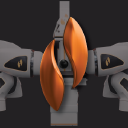
Thank you, operator, and good morning, everyone. I'm joined today by Kim Peery, our Chief Financial Officer. My prepared remarks today will be a bit longer than normal. As I use the occasion of our annual call to provide broader context on Stereotaxis, our technology and our path to building a highly impactful company. I will then review our recent results, as well as the key goals and expectations for the coming year. Stereotaxis is the pioneer and leader of robotics for endovascular surgery. We have developed an innovative suite of technologies that address the inherent limitations, risks and challenges posed by manual handheld catheters. Our mission is to make minimally invasive endovascular surgery more broadly available to improve its safety and outcomes and to modernize it with the benefits of digitization and robotics. Endovascular surgery is a broad and growing field of medicine where small interventional devices are navigated through a patient's vascular system. Endovascular procedures positively impact millions of patients annually with the mechanism of action of manual handheld catheters as fundamental flaws. During the procedure, therapy takes place at the catheter tip, but a manual catheter is held and manipulated several feet away at the handle. It's like holding a pencil from its eraser. Is not precise, not stable and there is limited reach. Manual catheters need to be rigid to allow for any control of the tip, increasing the risk of patient injury. Procedures are complex and operator dependent and visualization of a catheter exposes patients and physicians to X-ray radiation. Stereotaxis’s robotic technology addresses the inherent limitations, risks and challenges of traditional endovascular surgery by allowing for direct control of a catheter tip using precise computer controlled magnetic fields. This allows for unpresidented precision and stability, enables reaching areas previously unreachable and enhances patient and physician safety. Physicians upgrade our robot from a computer cockpit, seated and protected from radiation with full control over the procedure and with an ability to focus on the cognitive aspects of their profession. These benefits are not theoretical, as hundreds of physicians at over 100 leading hospitals globally have treated nearly 150,000 patients with our technology and there are over 400 scientific publications documenting our clinical value. A highly differentiated platform technology that confers meaningful clinical value in a large field of medicine serves as the perfect foundation on which to build a preeminent surgical robotics company. We are the best suited and see a clear path towards positively transforming the broad field of endovascular surgery in a fashion similar to how laparoscopic and orthopedic surgeries are being transformed. But while our technology has significant clinical and commercial validation, our ability to grow a flourishing business has been constrained by several structural limitations. We are clear eyed on these challenges and well on the way to addressing them. Our product ecosystem has three primary structural limitations. First, our robotic system can only be adopted as part of a construction process. It requires architects and contractors, room modifications and significant planning. It can obviously be done if effort is significant and leads to multiyear sales cycles with significant attrition in the sales pipeline. Second, our existing procedural focus, cardiac ablation procedures to treat heart arrhythmias, was built with significant dependencies on another company. Stereotaxis’s robotic technology is highly differentiated and sophisticated, confirming significant benefits in the EP field. However, in every procedure the actual ablation catheter used is owned, manufactured and sold by another company. Our users were also made largely dependent on that company's diagnostic mapping technology. That dependency creates various challenges for our customers, led to extended periods of limited innovation and creates operational, financial and strategic hurdles for Stereotaxis. Third, and the last structural limitation is that, Stereotaxis’s robot has remained a single application technology. Despite the technology having the ability and even the regulatory clearances to serve as a broader platform for robotic endovascular surgery, the company has not made the interventional tools to turn potential clinical applications like neuro, coronary and peripheral surgery into a reality. This limited scope reduces our market opportunity and the attraction of our technology to hospital purchasers. A clear eye diagnosis allows for strategic focus. With focus, creativity and effort we have developed and advanced an elegant strategy that addresses each of these limitations. Simultaneously addressing multiple significant structural limitations involving sophisticated technologies in a complex highly regulated environment is not done easily or rapidly. For several years now, we've been working energetically to make that strategic transformation of our product ecosystem a reality. This year, 2023, is poised to be an exciting year for us as we expect multiple technologies that address each of these limitations to achieve major regulatory and commercial milestones. Let me review the cornerstones of that new product ecosystem along with the status and expected progress of each. Stereotaxis’s proprietary robotically-navigated ablation catheter MAGiC is the closest to commercialization. It improves upon the aging catheter technology our current users are limited to and addresses the operational, financial and strategic challenges posed by our dependency in the EP field. We were pleased last summer to submit MAGiC for European CE Mark in line with the timeline we shared on this same call a year ago. In the fourth quarter, we updated you that our submission successfully passed the completeness check of the EU regulator. The next step in the review process involves us receiving questions on the submission in three distinct categories; technical, clinical and microbiology. We received our technical questions in December and responded to them early this year. We have not yet received any feedback on our response, but view the technical questions as un-concerning. We just received the clinical questions two days ago and are reviewing them and preparing a response. We are eager to receive the microbiology questions, but so far have not received them. The slow pace of the regulatory review process is frustrating as we are eager to launch the technology, but ultimately that timeline is outside of our control. We will do our part to speed this process by responding to questions rapidly and thoughtfully. We will use this time to set the stage for robust commercialization. We expect European CE Mark and launch of MAGiC as most likely to occur later in the second quarter or in the summertime. There's a substantial interest from our physician customers to start using MAGiC and we're excited for the impact of the launch. In the U.S. our IDE submission remains dependent on successfully completing a few preclinical survival studies. We establishing an official institutional animal care and use program of GLP level quality in November and ran several pilot studies to ensure the new facility and processes worked well. The development of that internal infrastructure and capability was a significant undertaking, but we have done it successfully and will do our first pivotal on the record studies this weekend. We expect to complete all the pivotal studies in the second quarter, submit our IDE application to FDA in the third quarter and initiate the human IDE trial before year end. We continue to see U.S. FDA approval of the MAGiC catheter approximately two years after CE Mark as a reasonable timer. Our second major innovation effort is a smaller self-shielding robot that frees us from the extensive architectural planning and construction currently necessary to adopt our technology. It makes our robotic technology more accessible to many physicians and customers that have wanted to adopt or try it, but were unable to navigate the logistic and economic hurdles. We are methodically advancing through mechanical and electrical and software development in line with the previously shared timelines. We expect regulatory clearance in Europe in the third quarter of this year, an initial limited launch of the system concurrent with that regulatory approval and a broader launch of the new robot in both Europe and the U.S. in 2024. The robot itself is a transformative innovation for Stereotaxis and the accessibility of our technology that along with this technological innovation, we will also be innovating our site assessment, installation, integration and sales efforts to take full advantage of what is now possible. Our third significant innovation is a family of interventional guidewires and guide catheters that expand the benefits of our robot into new endovascular indications. We've previously shared specific -- five specific clinical indications we're navigating tortuous anatomy is challenging and we believe we can improve patient care. Neuro interventions, coronary angioplasty, peripheral intervention, tumor embolization and abdominal aortic aneurysm grafts. The first guidewire in this family is fully designed and we have been grinding through the process of improving the manufacturing process. We believe we are nearing the end of that effort and that we will be able to begin formal testing within the next few months, allowing for regulatory submissions in the U.S. and Europe before year end. This is a 510(k) product with a relatively streamlined regulatory review timeline. Behind this first guidewire, we expect a broader family of guide catheters and wires to steadily advance to market. We have shared these devices in our strategy with several prominent physicians in multiple clinical specialties. Their excited by what we are building and view the technology as very practical and capable in addressing serious unmet medical needs. Once we have made a regulatory submission for the first guidewire we will host an innovation date to allow several of these conditions share their perspective and experience. These three innovations, the MAGiC catheter, newer mobile robot and endovascular devices are our strategic response to the three structural limitations described earlier. We have line of sight to each of them reaching significant regulatory and commercial milestones this year with growing commercial impact next year. Beyond these big three innovations, we were fortunate to nurture two additional opportunistic growth drivers that are synergistic and additive to our core strategic innovation effort. In China, we entered into a strategic collaboration MicroPort to establish a China specific EP product ecosystem and internally we are developing a digital platform for broad operating room connectivity. MicroPort submitted Genesis for Chinese NMPA approval late last year and has been working on some additional documentation and testing to supplement that submission. In parallel, they have completed the software efforts to integrate their mapping system with our robots and are preparing MAGiC and an additional ablation catheter for near term regulatory submissions. Given extended review time lines we have seen at China's NMPA, they now expect this whole product ecosystem to be available on the market in approximately a year from now in the first half of 2024. They are investing in a capital sales team, training and commercial infrastructure in anticipation of that launch and we already see a pipeline of engaged future customers. We are impressed with these preparatory commercial efforts and anticipated translating into a very robust launch soon after that ecosystem gains Chinese regulatory clearance. Our connectivity platform involves both a cloud based connectivity app called [Sync] (ph) and a next generation version of a large integrated display called Synchrony. Sync has been released internally for initial testing by our team to simulate an external release. We expect to continue to refine the app in the coming weeks such that it is ready for an external release to select physicians in summer. The large screen display is on track for regulatory submission in the fourth quarter and full launch early next year. The combination of Synchrony and Sync should be an attractive solution enabling streamlined workflow, connectivity and collaboration broadly in any operating environment. The Synchrony hardware will provide us an incremental upfront capital sales opportunity, while Sync will be available with a premium SaaS business model with premium subscriptions for hospitals, medical device sales forces and physician users. Each of these innovations individually serve as substantial growth drivers that dwarfs our existing business, they value being advanced independently but are also synergistic and complement each other. Collectively, they serve as our core product ecosystem as we look to transform endovascular surgery with robotics. We are confident these technologies serve as the foundation for preeminent high growth, high value medical robotics company. While driving this multiyear strategic transformation, we've attempted to navigate the transitory years with three primary goals, show that we can restart revenue growth, put in place the infrastructure that will be needed to grow an order of magnitude larger and become financially self-sufficient. Overall, we have made significant progress here. So our results last year demonstrate the challenges as well in navigating that path. From an infrastructure perspective, the highlight of the last year was moving into a new custom built headquarters and manufacturing facility. It was a significant effort and expense but will serve us well for many years. It enhances our operations, was financially prudent and facilitates the robust growth we anticipate. We've continued to refine and improve other aspects of our infrastructure across the company, including IT systems, quality processes and commercial capabilities. Revenue in 2022 was more challenged. On the heels of 2021, when we were able to demonstrate significant revenue growth and a restart in meaningful capital sales, we were disappointed by the reported revenue in 2022. Recurring revenue remained relatively stable and attractive with a slight decline attributed predominantly to reduce procedures in China during COVID lockdown and lower service revenue as various hospitals approach or undergo replacement cycles. System revenue, however, was down in 2022 compared to 2021. In some ways, the reported system revenue is not reflective of the actual progress we have been making in capital sales, nor the context for our efforts. In 2021, Stereotaxis demonstrated it can meaningfully restart capital store sales after many years of minimal activity. We recognized revenue of $11 million on seven systems sold that year. In 2022, we received purchase orders for eight robotic systems, a slight increase over the previous year. Three of those orders were for greenfield systems and five orders came from the United States. We only recognized revenue, however, on four systems as hospital construction delays have pushed out timelines for when we can ship and install systems. That has driven our backlog entering this year of $14.8 million in capital orders that have not been recognized as revenue. As we look at 2023, this backlog supports an expectation of double digit overall revenue growth. We expect to continue to grow orders for new robots above the eight system high watermark from last year and expect to recognize revenue in a portion of those orders, as well as a substantial majority of our backlog. Financially, 2022 was a departure from several years of maintaining a very low near breakeven financial posture. From 2019 through 2021, we were able to maintain free cash flow utilization of just about $1 million per quarter, despite substantial investments in R&D. In 2022, our cash utilization was approximately double that with cash use of approximately $10 million for the year. About half of the cash utilization was spending on the new headquarters, as well as increased spending on robot inventory beyond the cash inflows that would correspond with that inventory. We start 2023 with approximately $30 million of cash and no debt. That is a strong and comforting balance sheet given our history of financial prudence. We expect a lower burn rate in 2023 compared to 2022 with overall revenue growth, a lack of spending on the new facility and tapering inventory purchasing counteracting increased R&D spending and a lack of royalty income. We are comfortable with our balance sheet, allowing us to bring our transformative product ecosystem to market, to fund commercialization of that ecosystem and to carry Stereotaxis to profitability. Kim will now provide some commentary on our financial results and then I will make a few financial comments as well before opening the call to Q&A.