
Write the note before the outcome is known
The journal is most useful when it captures your thinking before price movement changes the story. Use it to record the thesis, the valuation range, the risk you are watching, and what would make you change your mind.

- Use Select stock to attach the note to a ticker, or leave it unlinked for broader market notes.
- Mark the optional decision as Buy, Hold, or Sell only when the note is tied to an actual decision.
- Use the editor toolbar for headings, lists, quotes, and emphasis so longer theses stay readable when you revisit them.
- Write down the numbers you used: fair value, current price, margin of safety, growth assumption, discount rate, and the key downside case.
Turn a valuation into an alert
A price alert is useful when you know the price that would make the stock worth revisiting. Link that alert to the journal entry so the future reminder comes with the original reasoning attached.
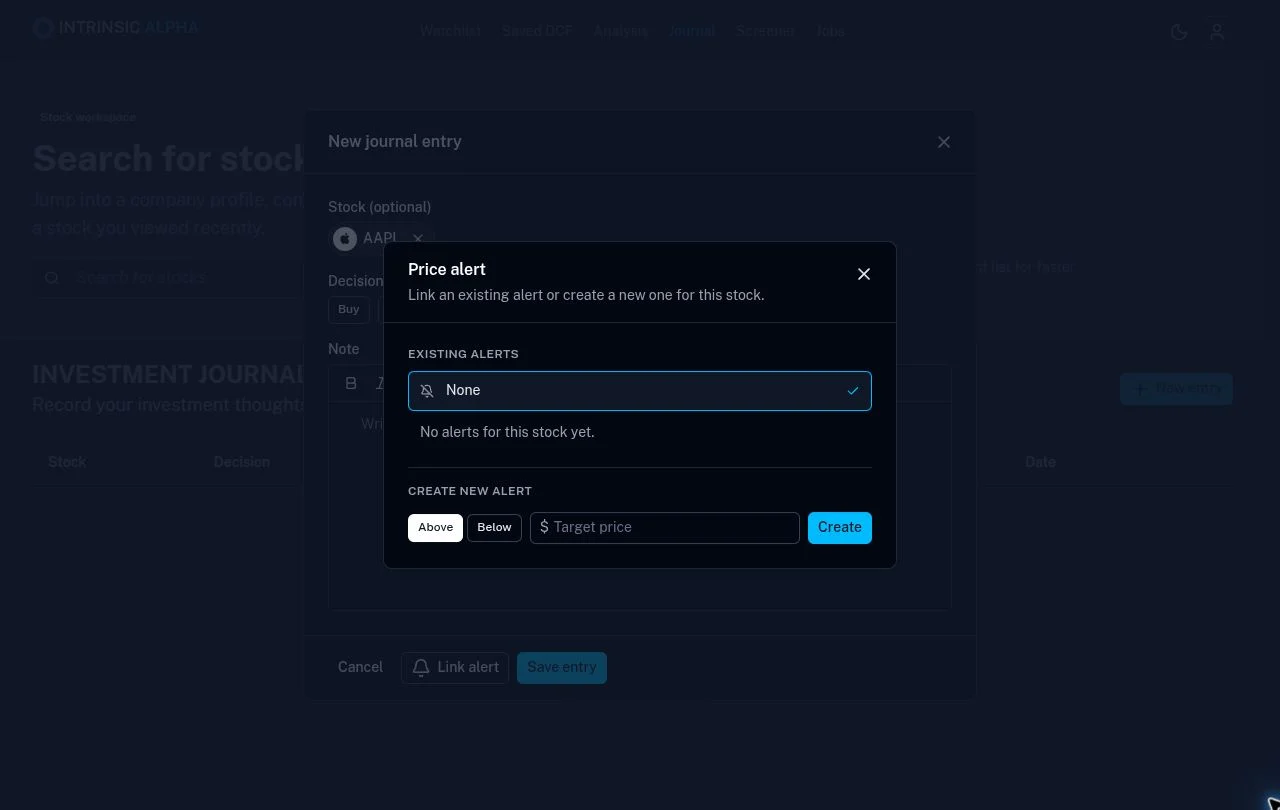
- Estimate fair value. Use the stock report or DCF page to estimate a fair value range. Decide what margin of safety you require before the stock becomes interesting.
- Choose an action price. Convert the margin of safety into a price. For example, if your fair value is $100 and you require a 25% margin of safety, your revisit price is about $75.
- Link the alert to the note. In a journal entry with a selected stock, use Link alert to attach an existing alert or create one from the alert picker.
Review after new information
After earnings, guidance, filings, or a major price move, open the old journal entry before editing the model. Check whether the original thesis was right for the right reason, wrong because the facts changed, or wrong because the assumptions were too optimistic.
- Update the saved DCF scenario when the company's fundamentals change, not just because the stock price moved.
- Add a new journal entry for major thesis changes instead of overwriting the old reasoning.
- Use linked alerts to separate stocks that are worth monitoring from stocks that are only temporarily interesting.