
Is the growth sustainable?
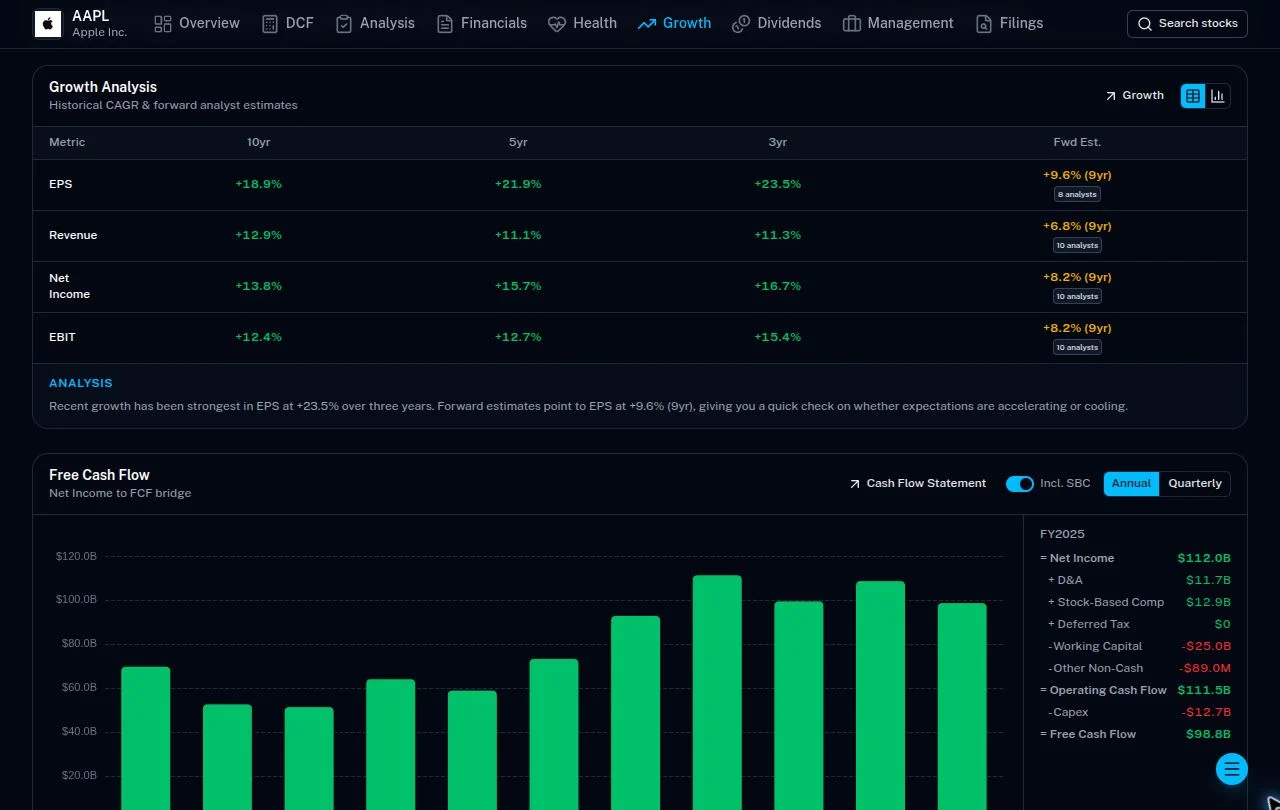
A high growth rate is great, but a sustainable high growth rate is what creates compounding wealth. The Growth tab visualizes a company's historical trajectory, making it easy to spot acceleration, deceleration, and cyclicality.
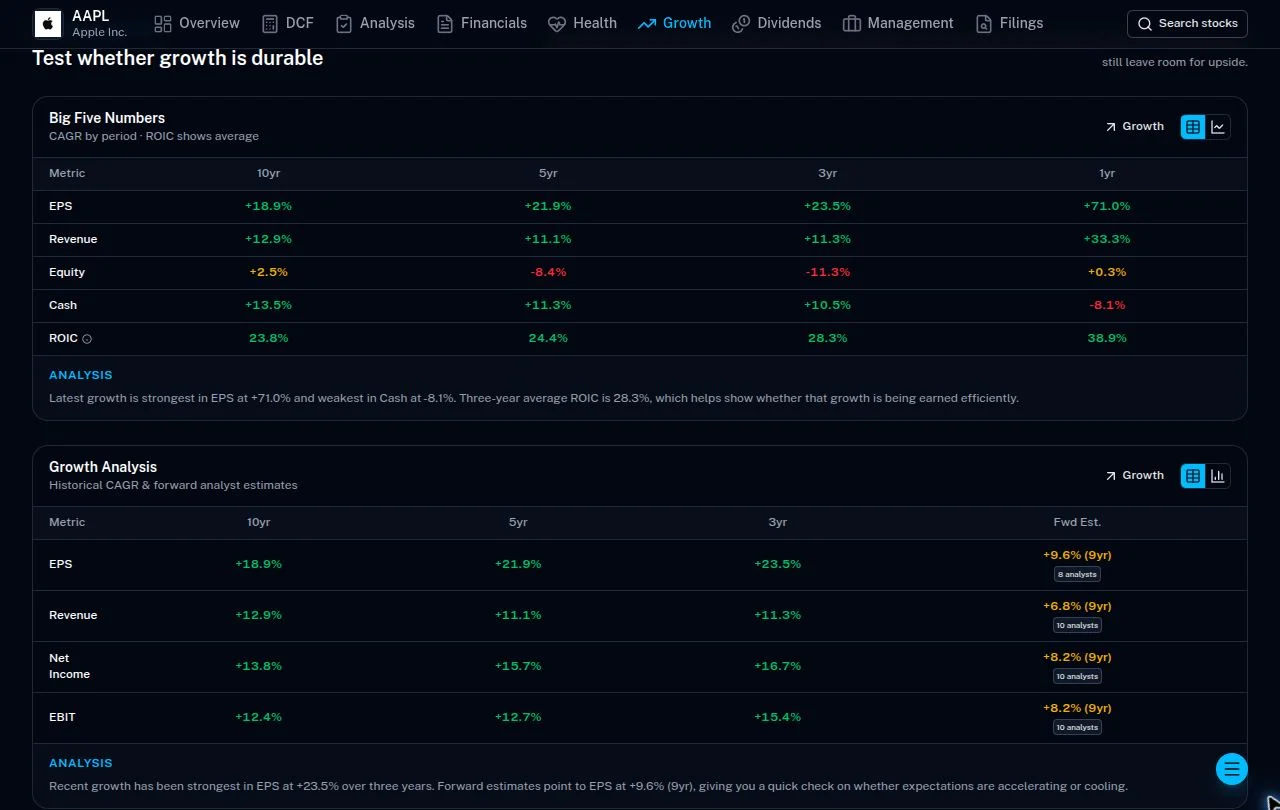
- Revenue Growth: The purest measure of customer demand. If revenue is shrinking but earnings are growing, the company is likely cutting costs—a strategy that eventually hits a wall.
- Earnings Growth: Is Net Income growing faster than Revenue? If so, the company is demonstrating operating leverage.
- Free Cash Flow Growth: The ultimate prize. Earnings can be distorted by accounting, but free cash flow represents the actual cash available to return to shareholders or reinvest.
Analyzing margin expansion
Growth isn't just about selling more stuff; it's also about selling it more profitably.
- Gross Margin: Tells you about the product's underlying profitability and pricing power. A declining gross margin might mean the company is cutting prices to maintain its revenue growth.
- Operating Margin: Shows how well the company manages its overhead (R&D, SG&A). Software companies often have massive operating margin expansion as they scale, while retailers often don't.
Beware the base effect
When reviewing percentage growth rates, always consider the starting point (the base).
- A company might show 100% earnings growth this year, but if earnings collapsed by 90% the year before, the "growth" is just a partial recovery to the mean.
- Look at the absolute dollar amounts on the Financials tab to confirm the real story behind the percentages.