
Follow the cash to the shareholders
Profitable companies have to do something with their cash. They can reinvest it, hoard it, pay down debt, buy back stock, or pay dividends. The Dividends tab helps you analyze the last two: how the company directly rewards its owners.
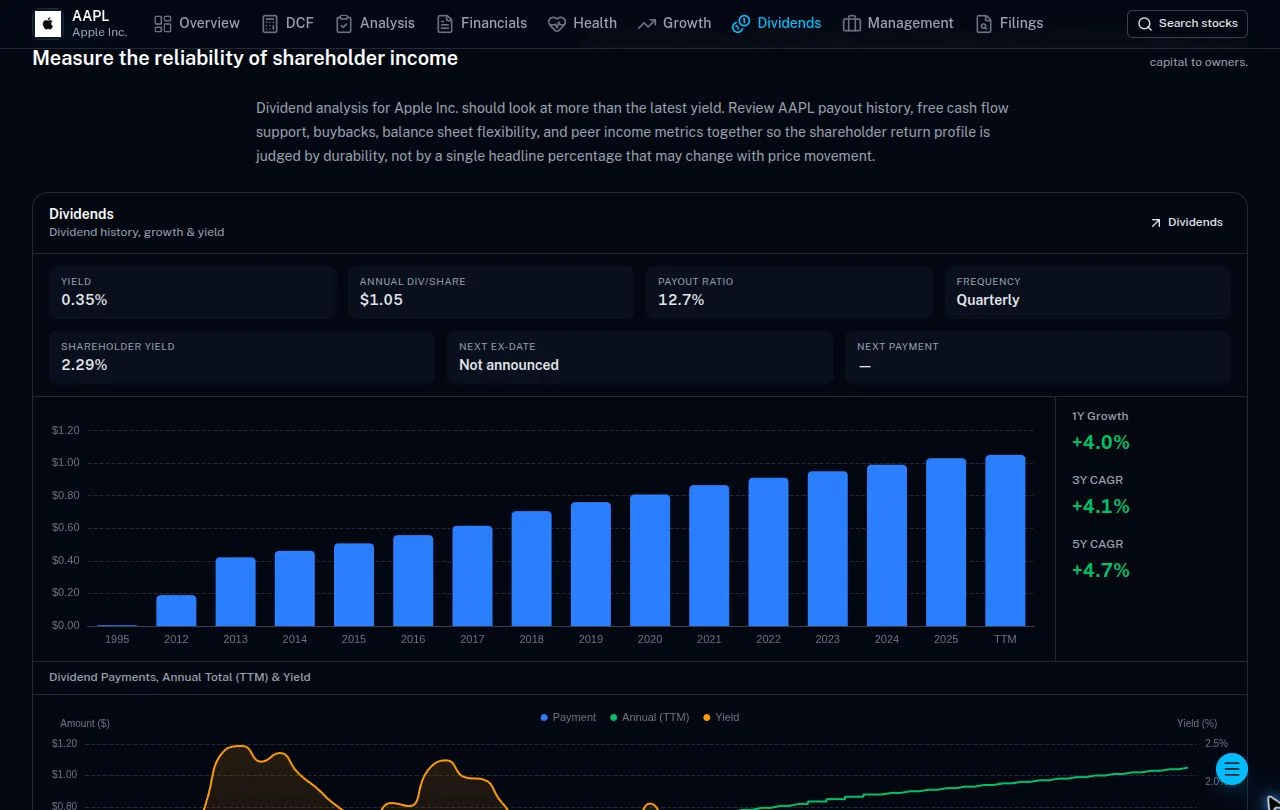
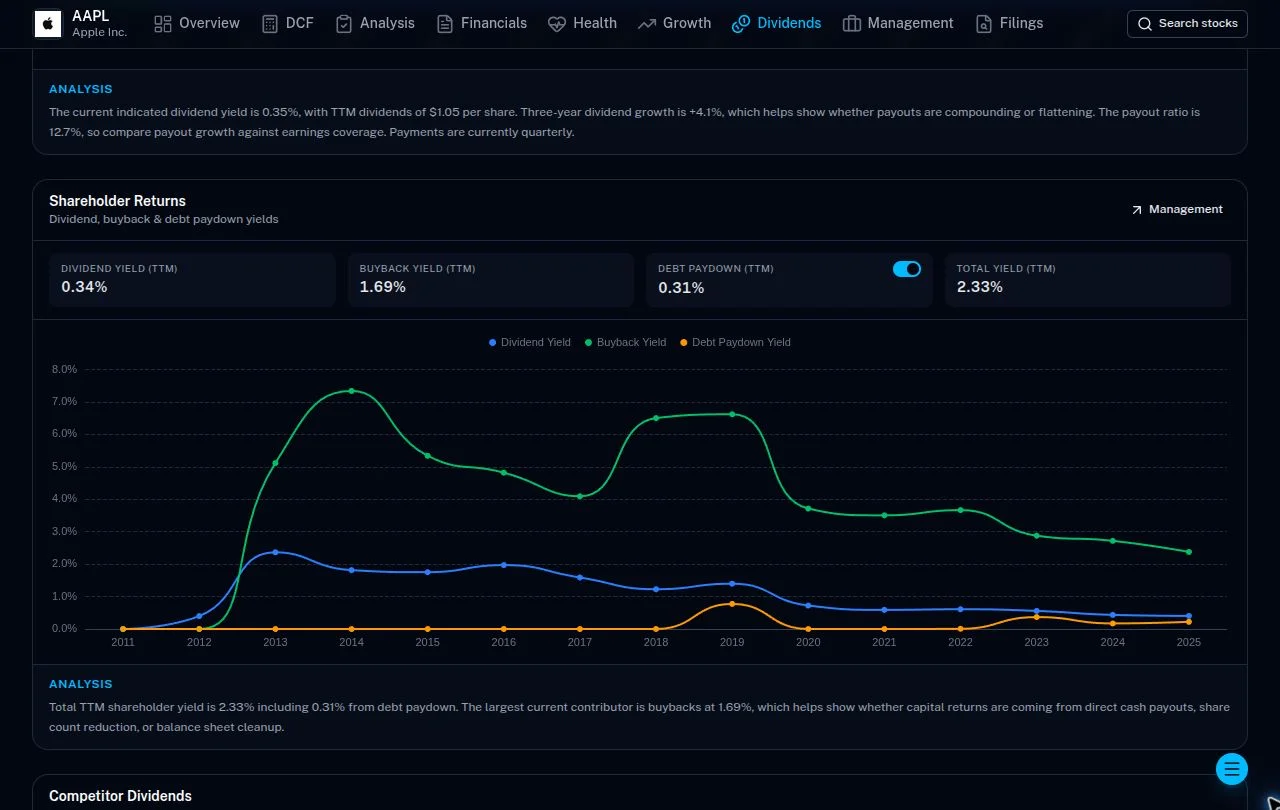
- Dividend Yield: The current annual payout divided by the stock price. Be wary of unusually high yields, which often signal the market expects the dividend to be cut (a "yield trap").
- Share Buybacks: When a company buys and retires its own shares, your remaining shares represent a larger ownership stake in the business. Check if the outstanding share count is actually shrinking over time.
Evaluating dividend safety
A dividend is only valuable if it is sustainable. A cut to the dividend often triggers a massive drop in the stock price as income investors flee.
- Payout Ratio (Earnings): The percentage of net income paid out as dividends. Generally, a ratio below 60% is considered safe, though this varies by industry (utilities and REITs comfortably sustain higher ratios).
- Payout Ratio (Cash Flow): This is far more important. A company pays dividends with cash, not accounting earnings. Ensure the dividend is comfortably covered by Free Cash Flow.
- Debt Load: Even if the payout ratio looks okay, a heavily indebted company might be forced to cut its dividend by its creditors during a recession. Always check the Health tab.
The problem with stock-based compensation
When checking share buybacks, look at the net change in shares outstanding. Many tech companies spend billions on buybacks, but their share count stays flat or even rises.
This happens because they are issuing massive amounts of new shares to employees as stock-based compensation (SBC), and then using cash to buy back shares merely to offset the dilution. This isn't a return of capital; it's an operating expense paid in equity instead of cash.